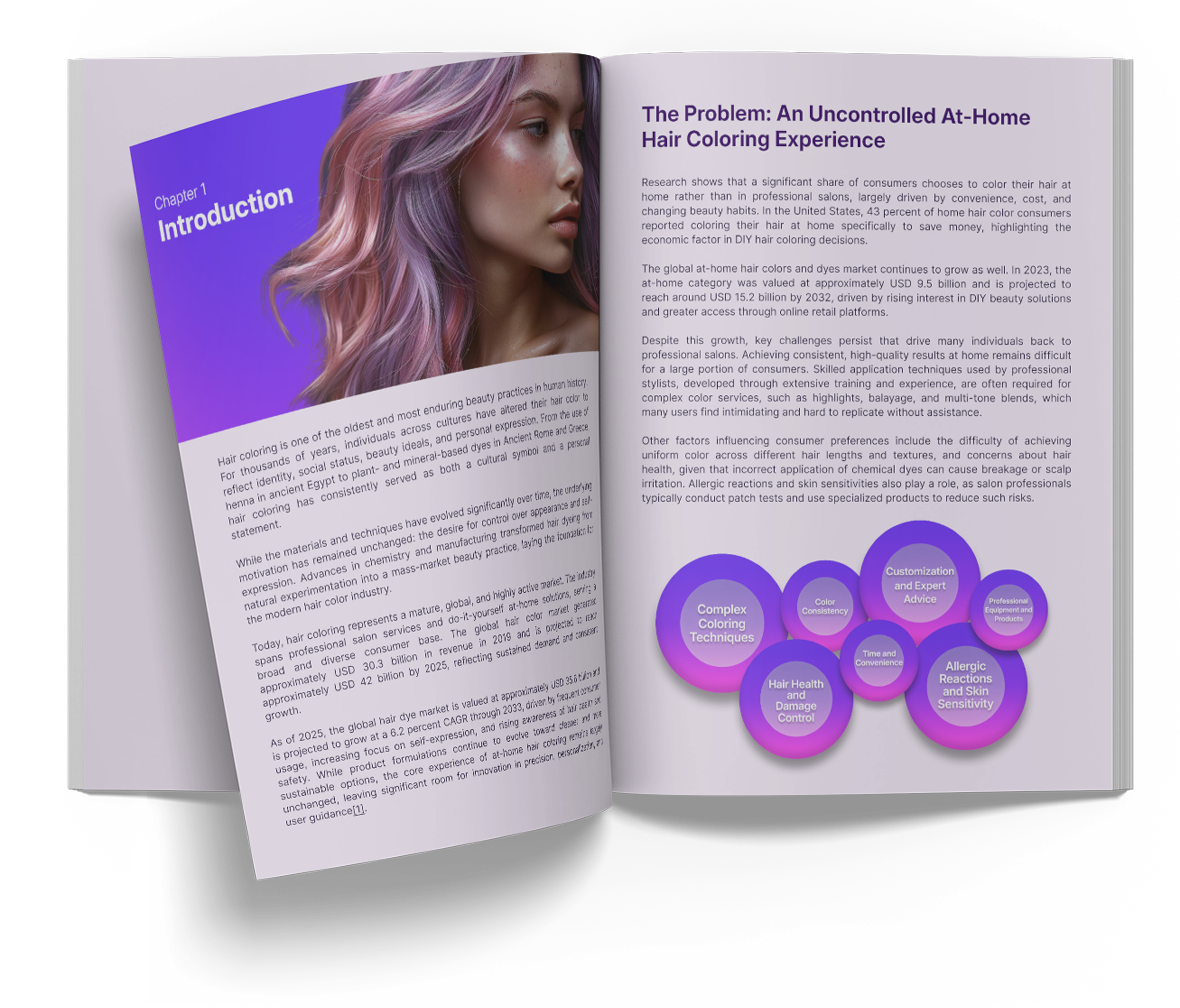
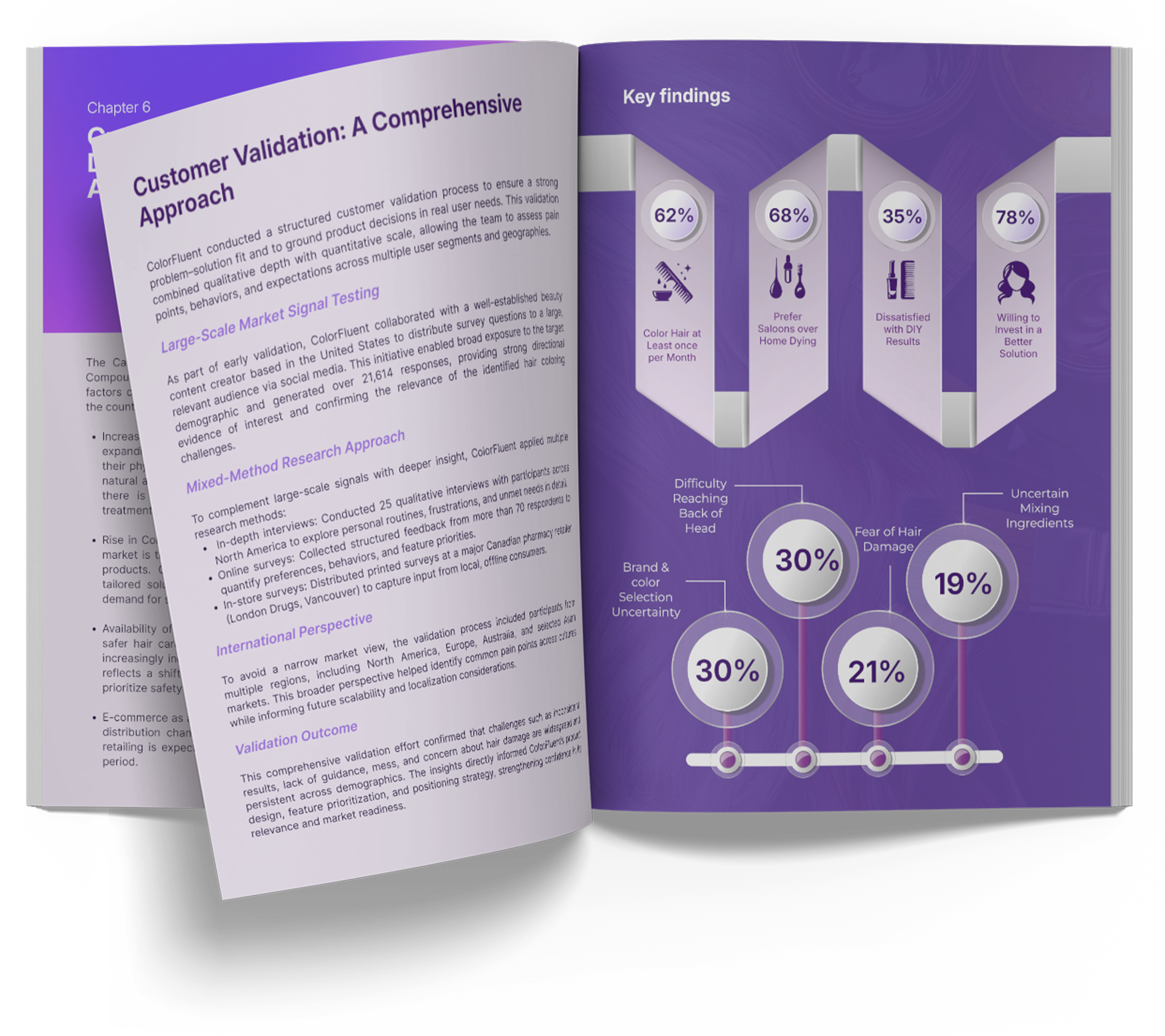
In-depth interviews across North America, surfacing hair-colouring routines and anxieties.
BeautyTech venture · connected hardware · 2022 → 2025
Colora
Lab
A smart hair-colouring device turned into a connected product ecosystem: a consumer experience, a salon workflow, and the decision logic that makes both credible.
My product-management contributionI translated research into two user journeys, MVP choices, product logic, and the commercial direction that connected them.
Scroll to read the caseHardware · software · commercial model
- My role
- Product Manager & Strategic Advisor
- Scope
- Concept → beta-ready MVP
- Products
- Device · consumer app · salon dashboard
- Product state
- TRL 8 · environmental beta next
01 / The product
A connected system, not a smarter dye.
Colora Lab is a hardware + software platform designed to turn a subjective ritual into a guided, repeatable experience.
At-home colouring is convenient and affordable, and unforgiving when it goes wrong. People are expected to identify their own starting colour, judge root regrowth, estimate quantity, and control processing time. In salons, the same uncertainty shows up as inconsistent formulas and lost history between visits. Colora Lab was designed to sit inside both moments with the same underlying intelligence: sense the hair, interpret what it sees, and turn that reading into a decision the person in front of it can trust.
My strategic product role was to make this proposition legible: define who the platform serves, what each audience gains, how one technical foundation supports two distinct workflows, and what the venture defers on purpose so the MVP stays honest.
The real opportunity was never a smarter dye. It was a system that could turn one anxious half-hour into a repeatable outcome.Product framing
02 / Discovery
Research split the market cleanly.
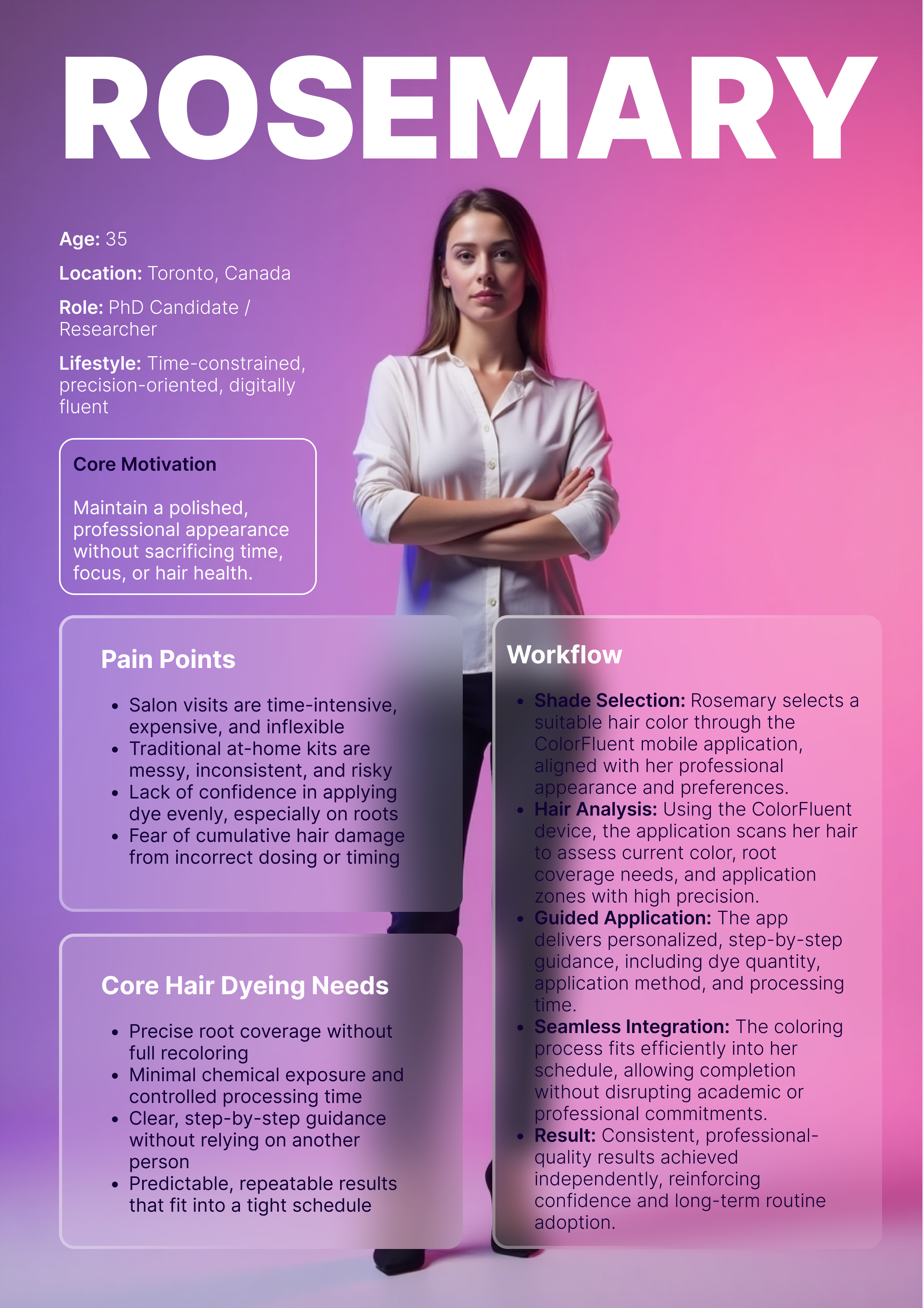
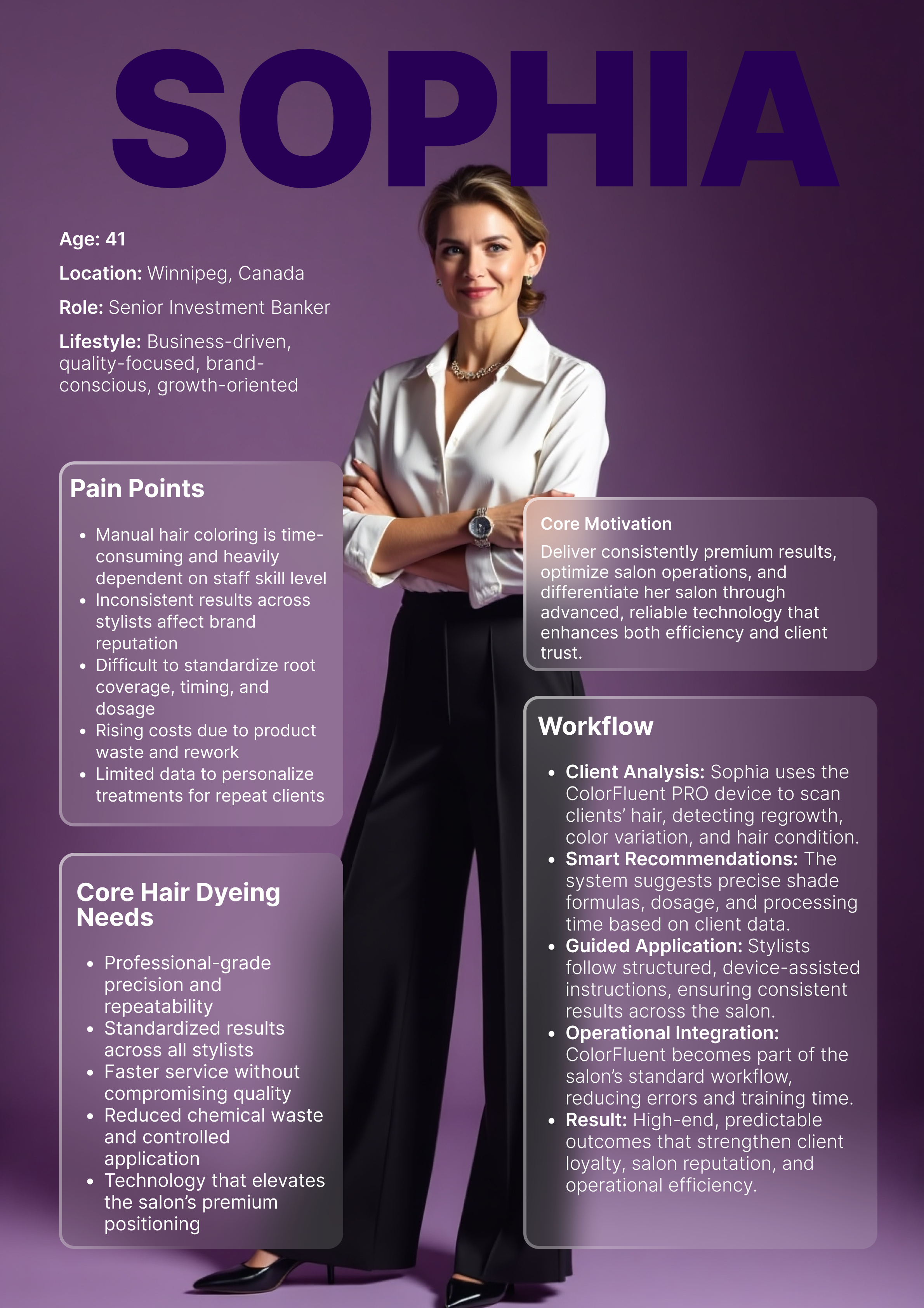
The same technology had to make an individual feel safe at home and help a stylist work faster with confidence.
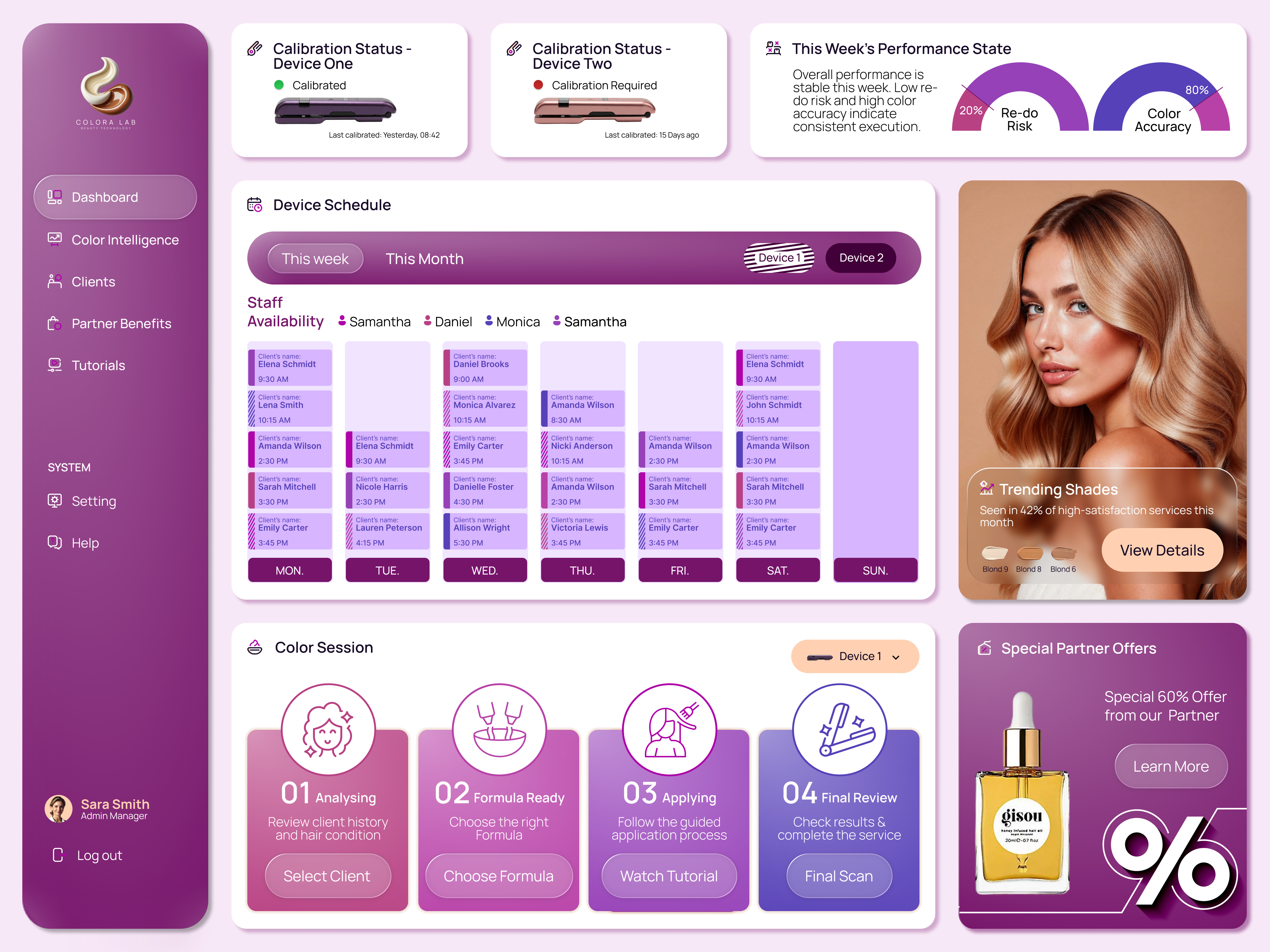
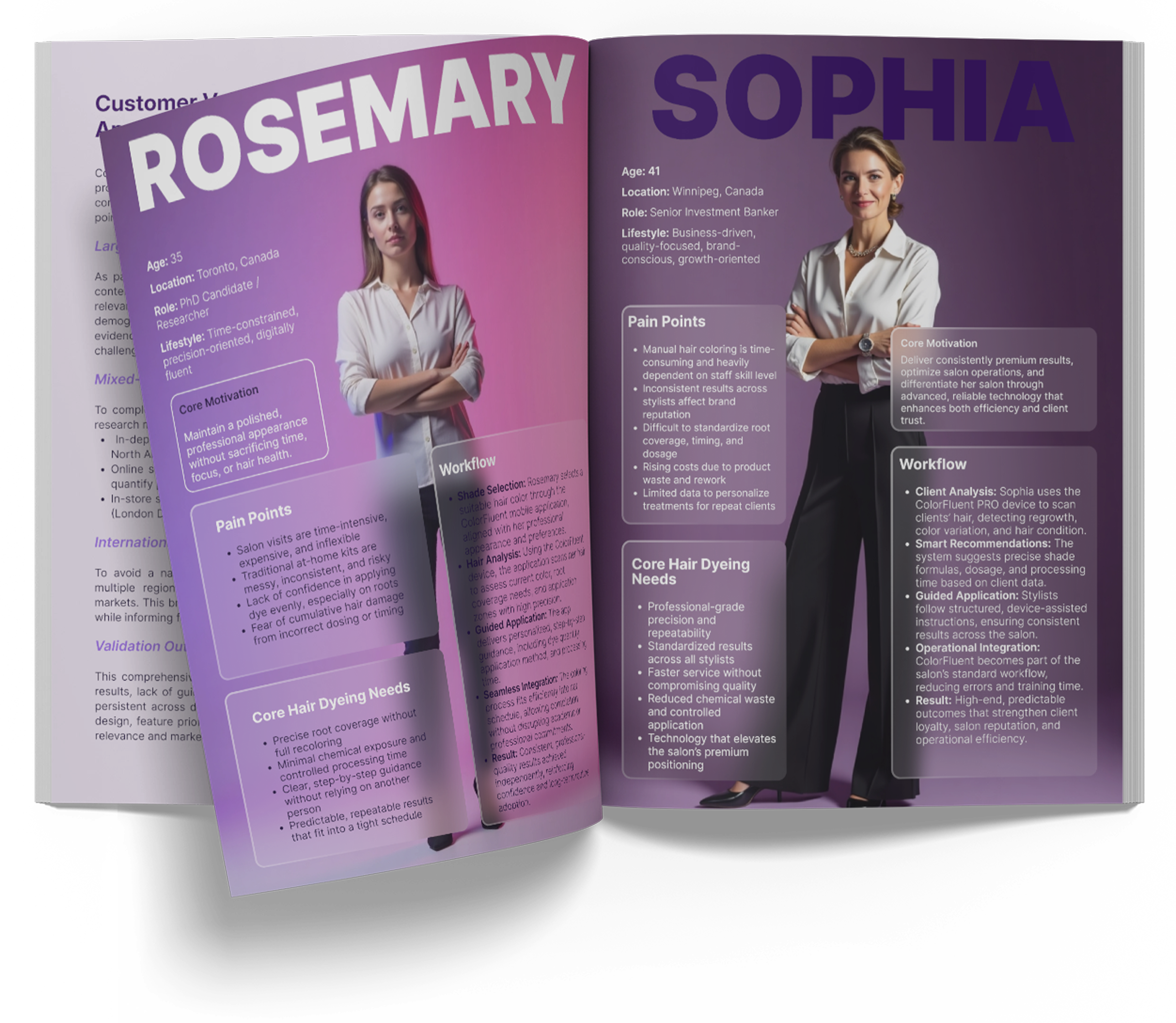
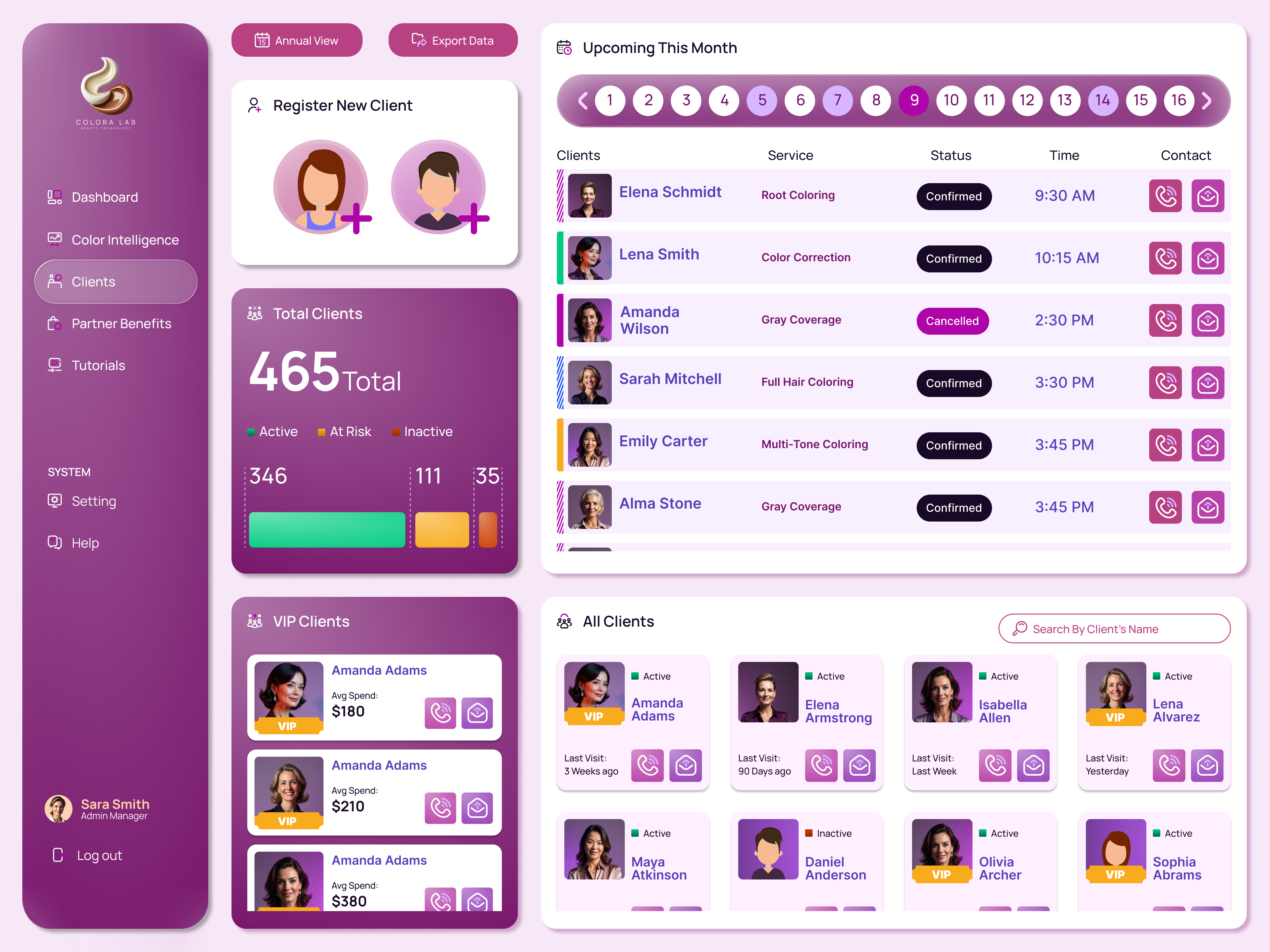
I supported the team in translating qualitative and quantitative research into a split product strategy. For consumers, the job to be done was clear guidance and error prevention. For salons, it was repeatable formulas, client history, and operational consistency. The product could share a technical foundation, but neither audience should be asked to use a tool designed for the other.
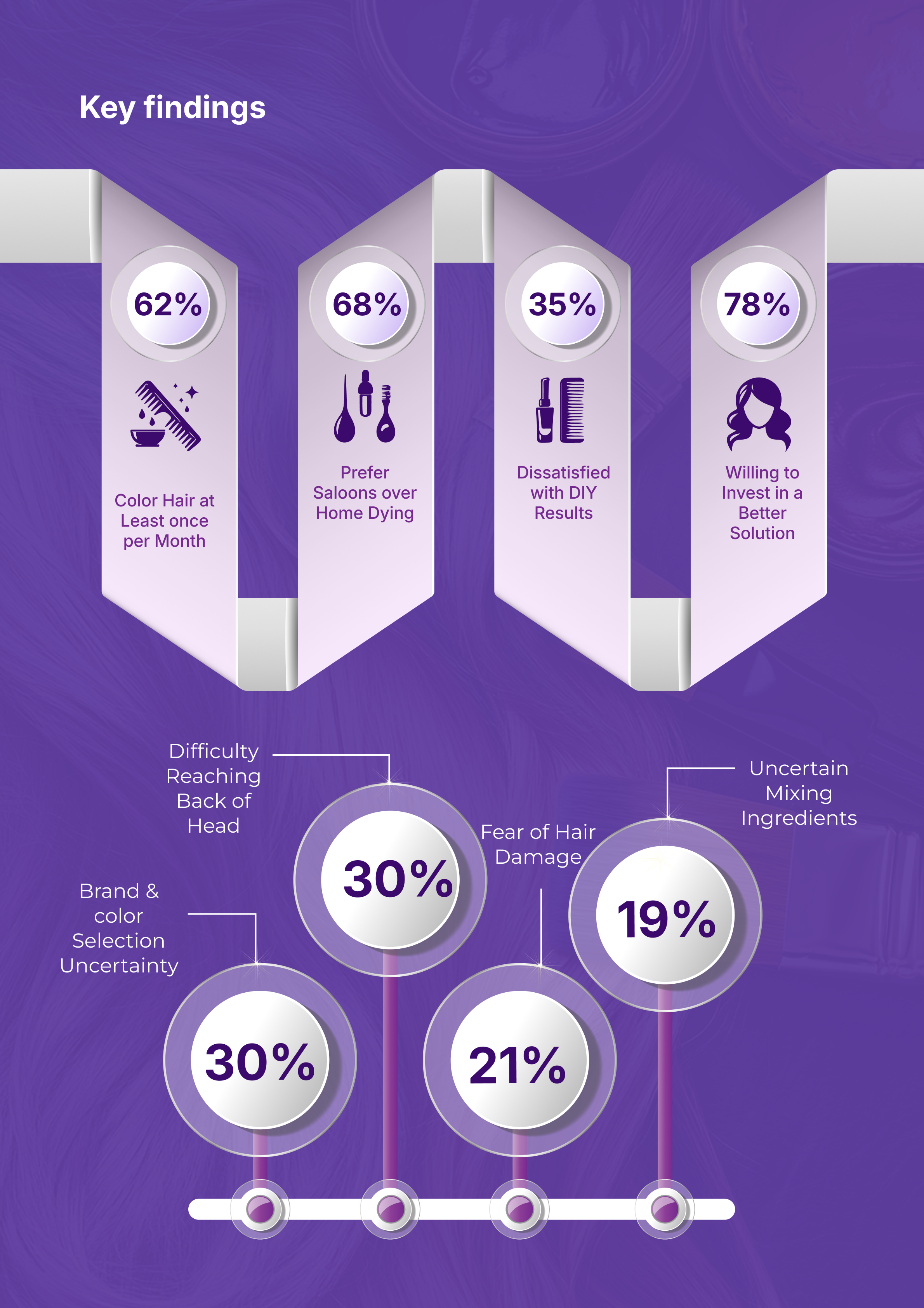
Survey responses, used to quantify feature priorities and behaviour patterns.
Core modes: guided home use and professional salon operation.
Shared system: sensing, recommendation logic, and a growing history of colour decisions.
03 / Strategy
Design thinking as a decision system.
The process connected research, product logic, and business strategy so that each artefact answered the next question.
This was not a linear design exercise. Consumer and salon insight informed the value proposition. The proposition informed the shape of the device and the split between the two apps. That structure clarified the commercial model, the partner conversation, and the roadmap. The result was a way for hardware, software, and go-to-market to see the same product through the same lens.
From ambiguity to a beta-ready thesis
01
Empathise
Interviews, ride-alongs, and stylist observation to understand the real ritual.02
Define
Jobs to be done, feature gaps, and a split proposition for two audiences.03
Shape
Form-factor moves, sensing scope, and the boundary between hardware and app.04
Prototype
Device iterations, guided-flow wireframes, and salon dashboard concepts.05
Validate
Stakeholder review, technical feasibility, and preparation for environmental beta.The product loop · one sensor, four moves
01 · SENSE
Read the hair
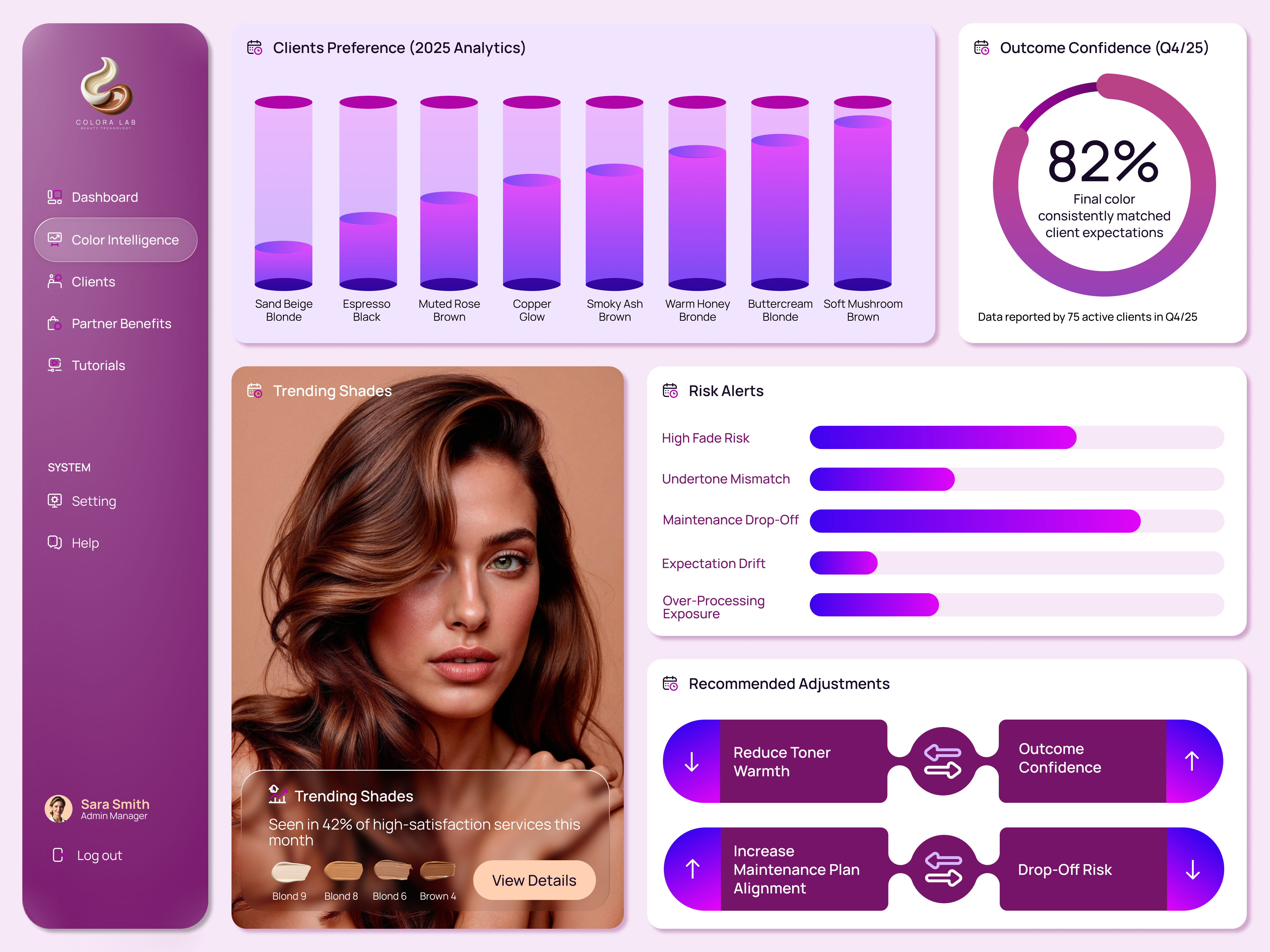
RGB sensing identifies colour variation and grey roots at the moment it matters.
02 · INTERPRET
Build a profile
Signals become a colour profile the recommendation logic can act on.
03 · GUIDE
Return an action
Tailored dosage, timing, and application steps for the person in front of it.
04 · LEARN
Grow the memory
Colour history compounds so each session is more confident than the last.
Same intelligence. Different pace.
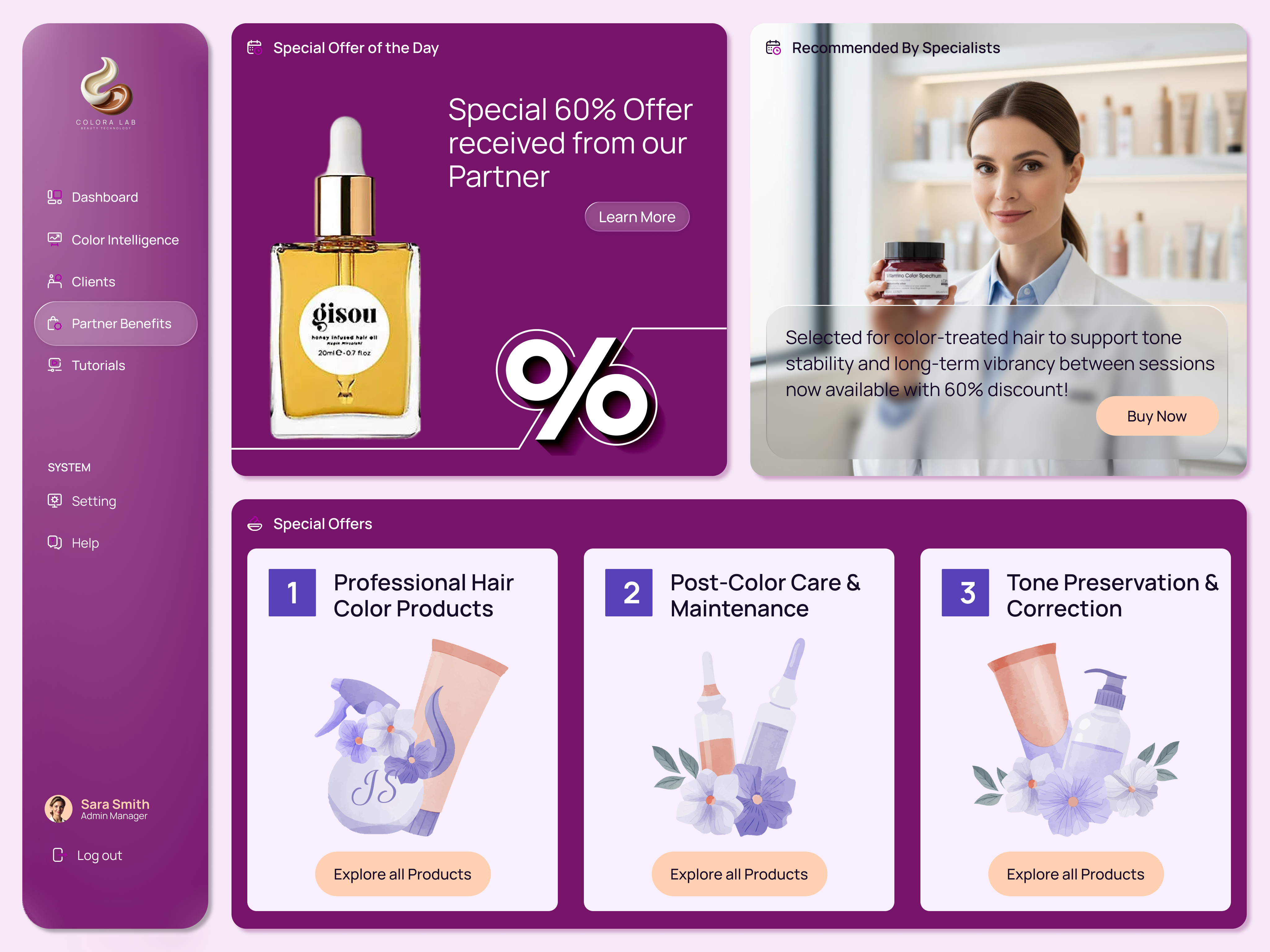
The salon dashboard supports a high-context professional workflow: consultation, client records, repeatable formulas, and less waste. It is not a larger version of the consumer app. It is a product with a different job to be done.
04 / Design calls
Trust had to be designed into every layer.
A hardware product becomes real when a compelling idea meets the limits of ergonomics, sensing, and human behaviour.
My role was to help the team keep the system coherent while it moved from proposition to product. That meant naming what each decision was optimising for, and being honest about what it deferred. Three calls did the most to hold the product together.
Shift the form factor
Early brush prototypes combined sensing and application, but introduced uneven dye flow, nozzle placement, and ergonomics problems. The product evolved toward a hair-iron-shaped form, giving more stable contact, coverage, and control in a familiar grip.
Ship RGB before NIR
RGB sensing gave the team a reliable route to identify colour and grey-root variation without prematurely adding the complexity of near-infrared analysis. NIR stays on the roadmap as a future capability, not an inflated MVP promise.
Two modes, not a dual-purpose UI
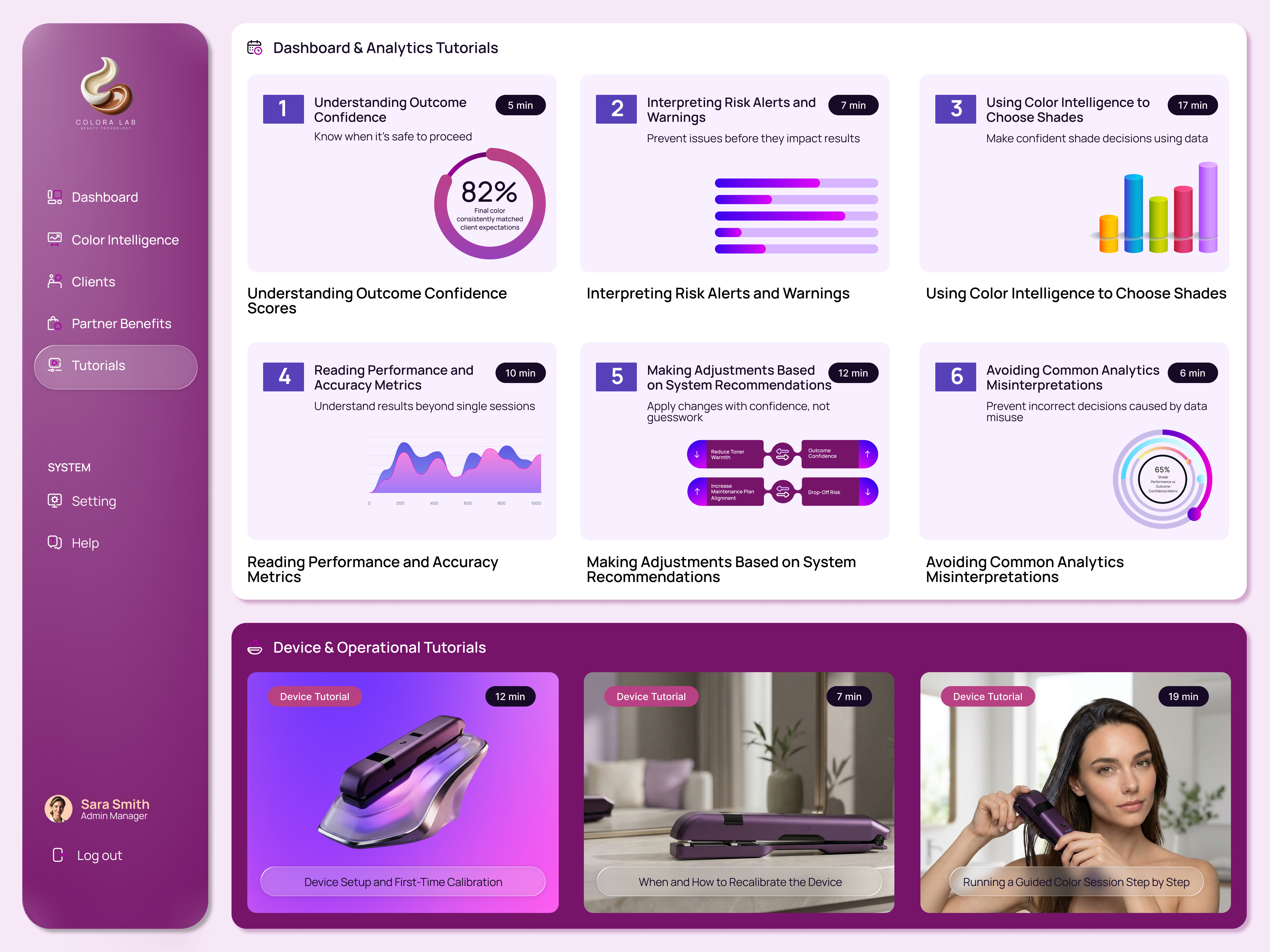
The consumer flow prioritises clarity, education, and error prevention. The professional mode prioritises throughput, history, and standardisation. Shared infrastructure, distinct experiences, no compromise UI.
05 / Outcome
A category thesis a team could execute on.
The work turned a broad beauty-tech concept into a beta-ready product thesis: clear users, clear value exchange, and an MVP built to learn.
TRL 8
Functional MVP developed and prepared for an environmental beta pilot.
What this means: the core system has been demonstrated in a near-operational environment. The next product question is not “can it work?” but “how does it earn repeat use and trust in the real world?”
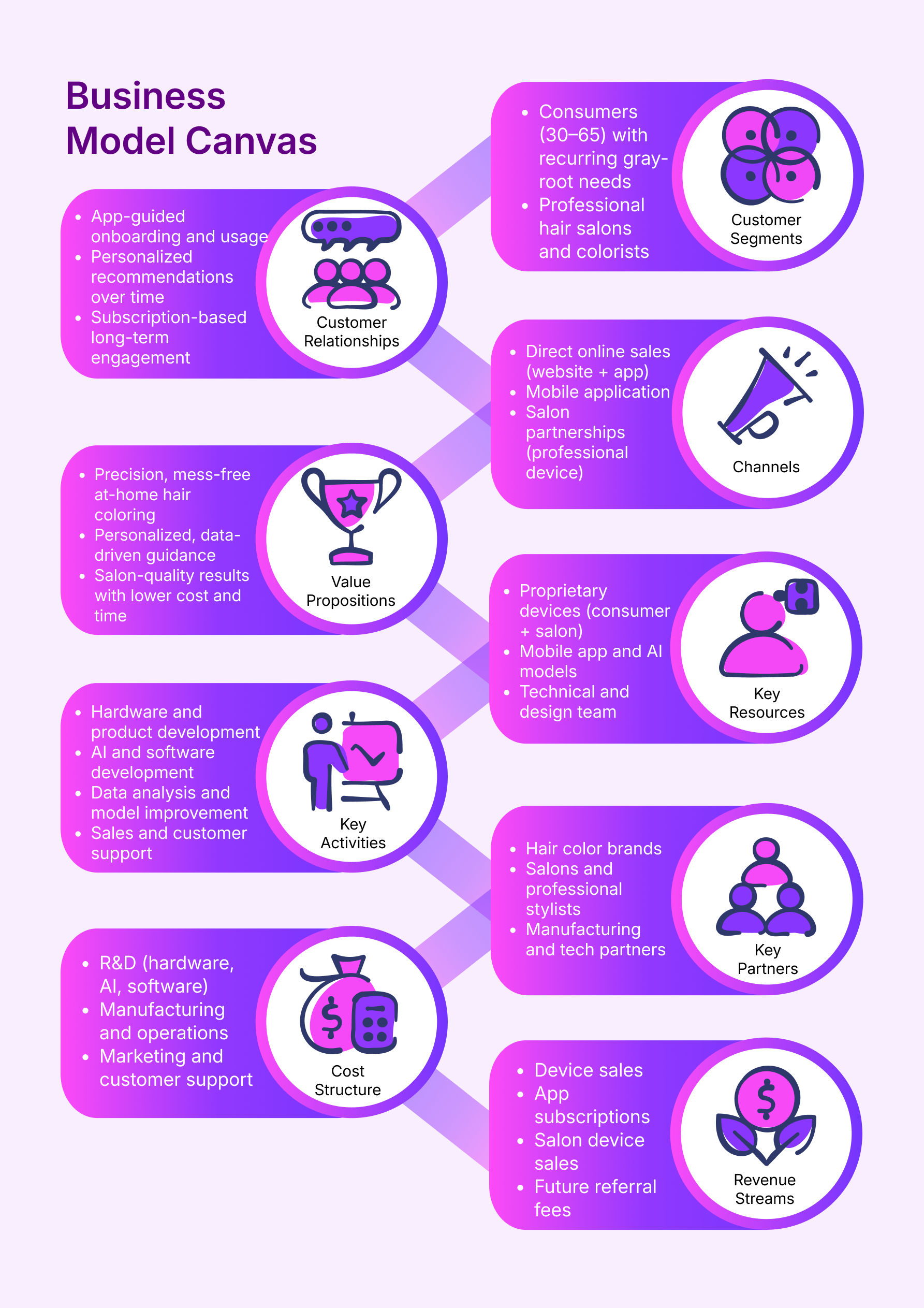
The commercial model is deliberately layered so the product is not only a physical tool. Its defensibility comes from a better decision loop over time.
Device sales
One-time hardware revenue with premium positioning and a clear consumer promise.
Guided subscription
Personalised guidance, colour history, and refinement of recommendations over time.
Salons + brands
Salon dashboards and brand partnerships that turn Colora Lab into shared infrastructure.
What I carried forward
For a new category, the best product strategy is not to add more technology. It is to make one uncertain moment feel more knowable.
Colora Lab reinforced a lesson I use across product work: hardware, data, and interface only become useful when they produce a better decision for someone. The device earned its place by reducing guesswork. The software earned its place by turning one scan into a guided experience that gets better with context. The business earned its place by making both defensible.
Next case studyBirthCare XR, an XR maternity platform →