
Personas mapped across the clinical, institutional, and consumer ecosystem.
MedTech startup · XR · multi-sided model
BirthCare
XR*
An XR-enabled maternal-care platform extending support from pregnancy to postpartum. I shaped its product, market, and growth direction across B2B, B2B2C, and B2C audiences.
Scroll to read the caseResearch · product direction · business strategy
- My role
- Strategic Product Manager Advisor
- Engagement
- Research · strategy · design
- Deliverables
- Pitch · playbook · plan · web
- Business model
- B2B · B2B2C · B2C
01 / The product
XR maternity care, beyond a single appointment.
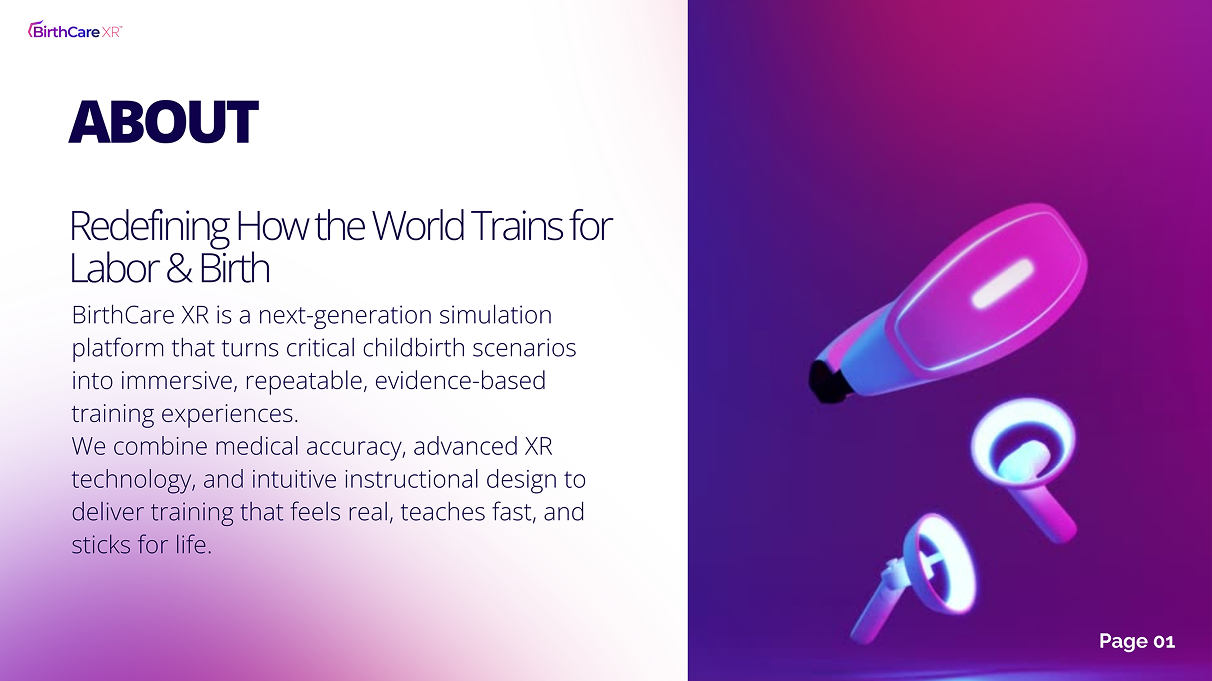
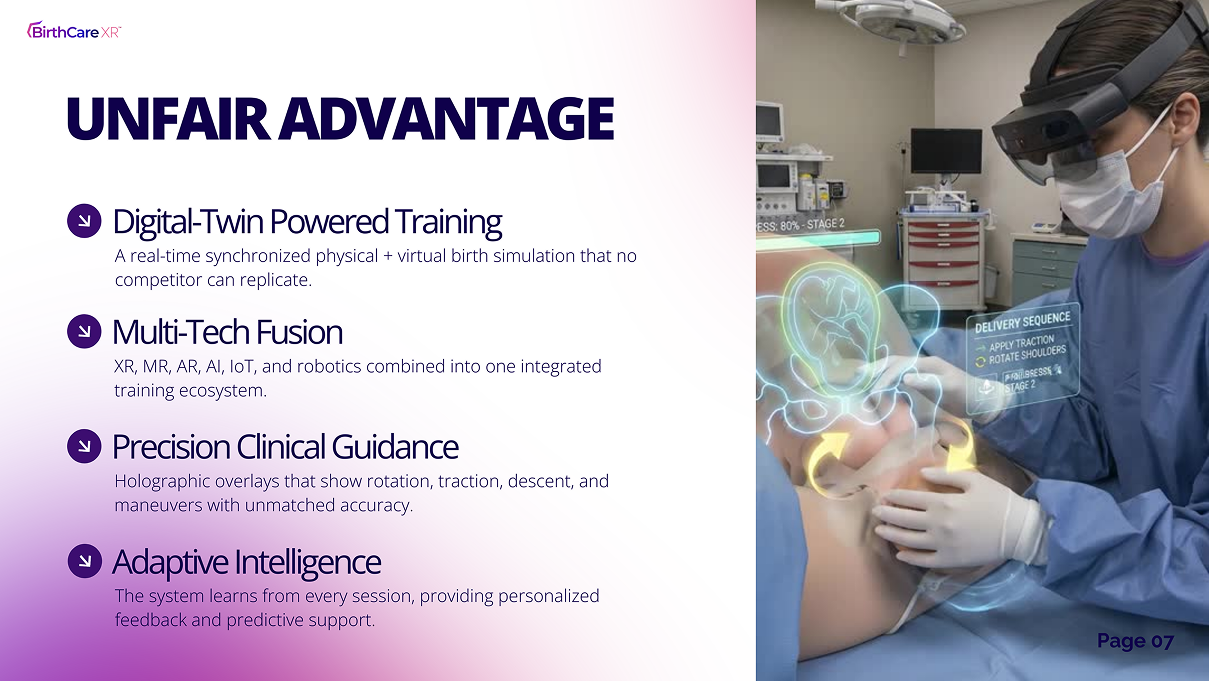
BirthCare XR is a high-tech MedTech platform designed to extend structured maternity support from pregnancy through postpartum.
The venture brings immersive XR education and training into a wider care system. For healthcare providers and academic institutions, it supports consistent training, scalable delivery, and clinical workflows. For pregnant people, it creates a clearer, more continuous route to education and support beyond the clinic. Its business model is intentionally multi-sided: B2B for institutions and care systems, B2B2C through partners that serve patients, and B2C for direct support.
My strategic product role was to make this high-tech proposition legible: define who it serves, what each group gains, how the experiences connect, and how the venture can grow without reducing a complex care journey to an XR demo.
In maternal care, “innovation” is not enough. The product must feel clinically credible, emotionally reassuring, and viable for the people who decide whether it gets adopted.Product framing
02 / Discovery
Research made the market visible.
I mapped the people in the system before deciding what the system should ask of them.
BirthCare XR is intentionally a multi-sided MedTech business, not a single-audience XR product. I helped model the distinct motivations, pressure points, behaviours, and purchasing power across B2B, B2B2C, and B2C. This grounded the value proposition in the reality of a fragmented care pathway, instead of a generic XR promise.
Connected business models: B2B, B2B2C, and B2C.
Decision framework connecting customer needs, care delivery, and commercial viability.
Assumptions treated as final product requirements without being challenged.
Explore the Business Model Canvas
Hover, focus, or tap a block
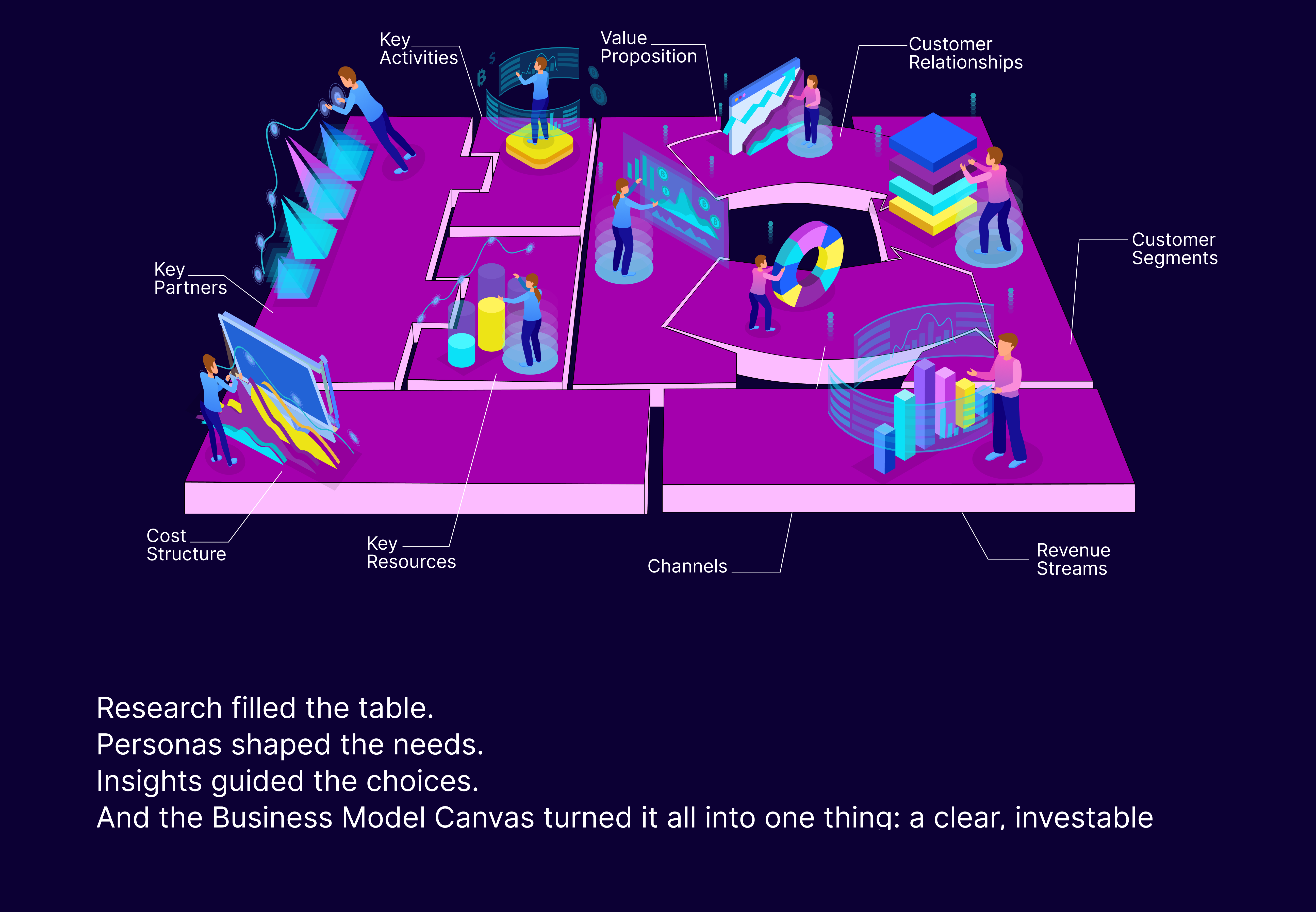
Choose a block to isolate its notes and read its role in the model.
00
The full canvas
A connected view of the partners, activities, value exchange, delivery routes, costs, and revenue assumptions shaping BirthCare XR.
03 / Strategy
Use design thinking as a decision system.
The process connected research, product logic, and business strategy so that each artefact answered the next question.
This was not a linear design exercise. Insights from customer discovery informed the product proposition. The proposition informed the business model. The business model clarified the website architecture, pitch narrative, and commercial roadmap. The result was a way for stakeholders to see the same product through the same lens.
From ambiguity to an investable direction
01
Empathise
Interviews, notes, empathy maps, and market analysis.02
Define
Jobs to be done, value propositions, and feature gaps.03
Shape
Information architecture, scenarios, and product flows.04
Prototype
Wireframes, visual direction, and interactive concepts.05
Validate
Stakeholder review, heuristic evaluation, and refinement.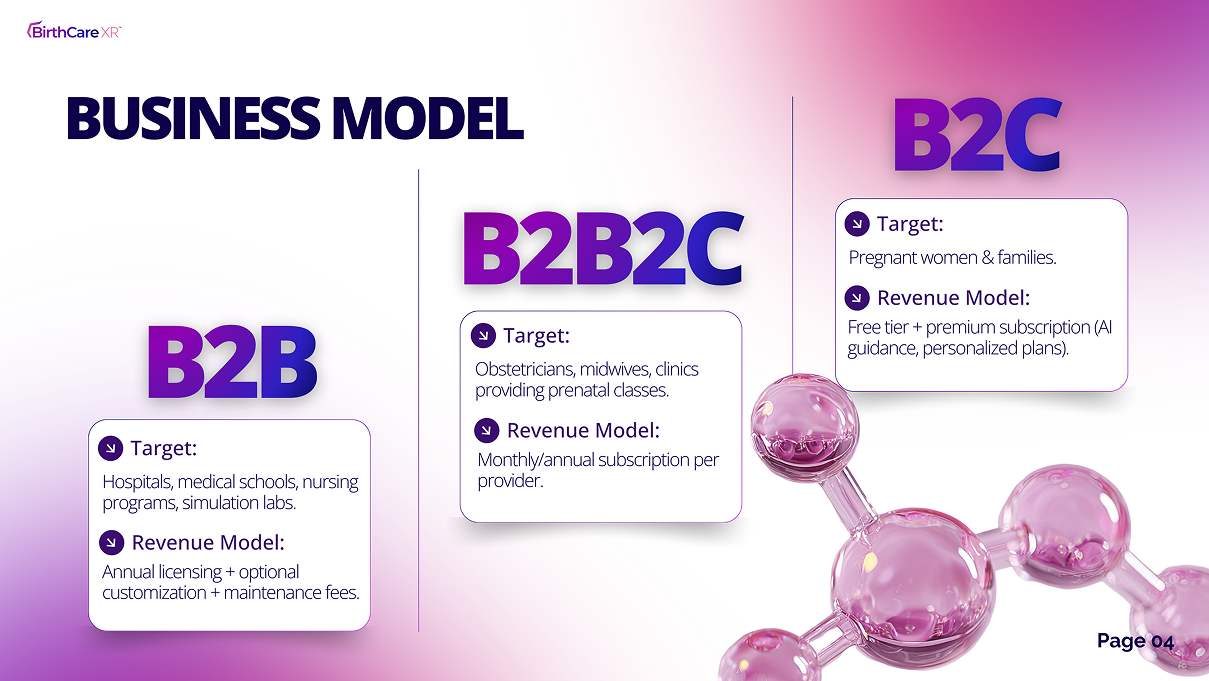
04 / Design calls
Trust had to be designed into every layer.
The brand and interface needed to feel advanced without being experimental, and calm without becoming vague.
For a clinical and institutional audience, visual design was part of the product’s trust model. I framed the direction around three consistent principles: healthcare-grade seriousness, emotional reassurance for high-stress moments, and technological credibility that did not make the experience cold.
Separate the audiences, connect the system
Different pathways were designed for pregnant people, healthcare systems, academic institutions, and care providers. The site architecture made their distinct value legible without pretending they share the same jobs to be done.
Make commercial logic explicit
The business model canvas converted discovery into a practical answer to who receives value, how it is delivered, and how the venture can grow. This gave the pitch more than an XR demo to sell.
Design the brand as a trust signal
Deep indigo, berry, and warm apricot balanced clinical focus with human warmth. The visual system was an intentional cue for a healthcare product that is both technically capable and emotionally sensitive.
05 / Outcome
Clarity that a venture team could build from.
The result was a connected set of decisions and artefacts that made BirthCare XR coherent, credible, and ready for the next conversation.
$1.5M
Investment offer reflecting external confidence in MaternaPlus’ wider XR training foundation.
Strategic deliverables: a pitch deck, company playbook, business plan, and scalable UX foundation. The investment offer represents wider company traction, not a completed BirthCare XR financing round.
The experience was refined through stakeholder review and heuristic evaluation, aligning user needs, business goals, brand positioning, and a clear path to engagement. More importantly, the work created a shared operating picture: who the product is for, what care problem it meaningfully addresses, why each audience would adopt it, and what needs to be true for growth. That is the difference between a promising concept and a strategy a team can act on.
What I carried forward
In a high-complexity domain, a good product strategy creates alignment before acceleration.
BirthCare XR reinforced how much of product work happens before a roadmap. When clinical constraints, user needs, commercial pressure, and technology each have a seat at the table, research has to do more than generate insight. It has to make a shared direction possible.
* Project name has been changed due to NDA and confidentiality requirements.
Back to portfolioExplore the rest of my work →